Monday, March 11, 2013

@ Thanjavur - The land of rich culture


It was 10.a.m when we reached Thanjavur, the head quarters of the Thanjavur district. Before i share my travel experience, a brief history of Thanjavur which i am proud of:

 Thanjavur which was the domain of the The Great Chola rulers is the cradle of Tamil culture . The successful Chola kings patronized art, craft, cuisine, architecture and literature during their epoch making period marking a cultural renaissance. To name a few are the famous Chola period Bronze sculptures of which is the famous dancing shiva called ‘Nataraja’. It is not news anymore how this idol fetches a huge value in the international market even today(courtesy: Subhash Kapoor). The famous dance form ‘Bharatanatyam’ originated from the temples of Thanjavur. The traditional seat of Classical music- The carnatic style also has its birth here,  The thanjavur art plates with intricate engraving and in-lay work called thanjavur thattu, the papier maiche mirror work plates, The rich art called  'Thanjavur painting' made with gold leaf and gems,  bell metal castings, the grass mats called 'Korai Paai', the musical instruments like veena, ornamental jewellery called ‘The temple jewellery’, handloom silk and cotton, the beautiful GIS bobble head dolls called ‘Thanjavur Thalaiyatti Bommai’ , The famous Thanjavur cuisine -  all owe its origin to this civilization. No wonder, people who originate from here take pride in the fact that they are Tanjoreans.

 This district's prime occupation  is agriculture and it is famous for its agricultural activities and is rightly acclaimed as the Granary of South India. All thanks to the River Cauvery, which was channelized due to the foresightedness of a great chola king whom I mentioned here.  The criss crossing network of the river channels irrigate the paddy fields, coconut groves, mango orchards, sugarcane plantations lending its name. Apart from agriculture, it is also famous for pisciculture or marine fishes. Sadly though, of late many agricultural lands have been transformed into  industrial and residential plots due to famine and ryot problems.

The Cholas extended their territory in the north till the Ganges and in the south till Anuradhapura in Ceylon. Their epoch making 1000 year rule was taken over by the Pandyas, Khiljis, Nayaks,  the Mahrattas( son of Chattrapati Shivaji)  and then the British till 1947.

All these rulers have left their stamp of power and  genius in the  form of art, culture and architectural grandeur none of which were massively destroyed during alien invasions.

We marked our presence at some of the places. The Thanjavur palace, The Saraswathi Mahal library, the Palace Art gallery and the finest specimen of  Chola architecture - the Grand Brihadeeswara temple- a UNESCO world heritage site again which is a historian and archaeologists delight.

Our first entry was at India’s best kept secret - the Royal Saraswathi Mahal library which was on my bucket list for long. The library was formed and developed in the name of ‘Saraswati Bandar’ by the Nayak kings. The Mahratta kings later developed the library into a Royal Palace library in their palace compound. King Serfoji II ( the second son of Chattrapati Shivaji) is called the architect of the library which has some of the world’s rarest manuscripts(47,334) and personal collection of books numbering 67,233. The Encyclopedia of Brittanica hails it as the ‘most remarkable library in India’. Photography again was not allowed inside the library museum which is small but gives a glimpse of what’s store in the huge library. We missed the library due to the ‘facelift’ given to the library. But the small library museum itself housed some rare time defying treasures like  rare photographs called Daniel prints, maps of 1786 A.D( in this map Australia was marked as New Holland) and some rare paintings. It was an enriching experience. 
Check  a few pics here. Will make a photo post with the remaining pics later.

The board at the entrance to the library museum

The stats of the library at the entrance(click on it to read them)
                                               The art worked ceilings in the portico. (An elephant and cow)

                                                         The artwork @ the arched portico

                           The entrance to the Palace art gallery adjacent to the palace library

                               The mil-dewed goodagopuram called the watch tower, one can take the narrow steps above which gives a view of the city,. It has beautiful stone sculptures in the open space around. The right side is the durbal hall of  king serfoji. Actually the palace is not a palace in the true sense, it is a  huge royal mansion of the Nayak kings and later the mahrattas.


The corridor in the palace,  the palace is not maintained to be showcased. It has some secret passages which leads to the Big temple. The H and sonny boy tried entering  by going down a few steps, but it was suffocating and  not well maintained. Infact, no one dares to venture. The palace needs a huge revamp to be showcased to the world.

                         Another view of the durbal hall and the art gallery housing bronze sculptures
The artwork above the durbar seat

A statue of King Serfoji gifted by the Dutch on the durbar seat has a removable cap and scabbard. Many foreigners are in awe and fascinated by the  Indian culture and bought lot of handicrafts. There were more foreigners than Indian tourists. In the pic, you see Italian tourists from Tuscany with their guide who are on a south indian trip.


                                               These are a glimpse of the artefacts in the art gallery. There were huge Idols too.


The bell tower near the art gallery

  The Brihadeeswara temple, another UNESCO world heritage site, maintained by the ASI. This temple is  a huge mystery to archaeologists. The temple is made up of granite the strongest stone in the world. It amazes them to how they have cut and carved when there were no high precision tools 1000years ago.
                               One of the three temple towers through which you enter the temples. The rocks, the guides say were filled with water and after a long period the rocks eventually broke.

This temple recently celebrated its 1000th year. It gives you goosegumps as you run your fingers over them.


That is the main temple tower called Vimanam which is a architectural wonder made of single stone granite. The biggest wonder is the huge cap stone in the top of the big temple. The weight of the cap stone is 80 tons . It is amazing how the stone was lifted to the top when there were no high end equipments like cranes. It is said the elephants carried the stone to the top and a ramp was used.  It is constructed in such a way that the shadow of the temple gopuram does not fall on the ground. It falls on itself. Not an easy task wonder archaeologists.. 


The bull(Nandi) overlooking the shiva is supposed to be the second largest in India. 


 The huge temple has corridors on all the three sides. Alongside run shivlings like these with  high quallity paintings and inscriptions on them. The paintings explain the greatness of the Chola kings and depict many stories. It is sadly concealed behind grilled bars like these and not easily seen. The colors chosen for the paintings are still good and healthy.
The temple also has lot of secret passages and underground passages which are now closed. THe passages had lots of paintings too said the guide. The  temple was crowded unlike GKC and it was difficult to capture the temple without visitors.It has a temple elephant which blesses the visitors.
Now off to Tranquebar - my next travel post.

Friday, March 1, 2013

GKC- The journey not the destination - 3

At 6 in the morning we left Neyveli  township after a days rest on Christmas We drove out of the township to enter a village lane leading to Thanjavur which was our destination. From Neyveli, MIL too joined us on the road trip  filling us( especially the children) with lots of anecdotes from yore since this territory is familiar to her. This made the journey more interesting.  

 Throughout the journey we were blessed with the best driving weather. We had our windows downed and the car was on medium pace so that we could stop at many places and soak the  beauty of the countryside and  breathe in the fresh air.  Either side of the road opened up to scenes which were refreshing and novel for urban souls   like lotus/lily laden, duck wading ponds, the carpetted luminscent green fields, flock of white birds in the sky, the meandering rivulets of Cauvery and its tributary coleroon( kollidam) , the dung plastered thatched huts, traditional pucca house, the simple life of the villagers enjoying rural bliss, walking to their fields,  chatting under tree canopies, driving their flock of sheep, and herding their cattle, some enjoying doing nothing and  watching people on the move.  All scenes moved past  in time to an older, slower world till we reached the sign board of a village Jayamkondan( the victor in tamil)

At Jayamkondan,  we took a detour of 3 kms  to the left which led us to the once thriving chola capital-  Gangai konda Chola puram(GKC) which is now a UNESCO declared World Heritage site. In tamil, it means the chola who conqured ( held) the Ganga.They  made it their capital after they conqured till the Ganges in the north and hence the name. Their stamp of architecture is evident in  The  replica of Brihadeeswarar temple modeled on the The big temple in Thanjavur. More than a temple of worship, the gigantic and grand Chola temples were home to art, architecture,culture and social work. The temples and palace were destroyed during British aggression but still a major part of the temple remains making this a great living temple of Chola while  the ruins of the palace are buried. Excavated remains of the palace remain though some 10kms away.  But that is 10 century old  History and very far away back  and may be a  topic for me to make a post on GKC. This is now a sleepy village except the area marked  and maintained by ASI, this place has not much  visitors and is not very famous like its parent temple in Thanjavur unless a few curious foreigners and Indians visit.We spent our time clicking photos where there were no visitors except us  apart from The ASI employed malis who were tending the gardens.

From there  we were back on the road to cross a narrow but long metallic and concrete bridge, we were stopped by a policeman with a walkie talkie.

He stopped us and the dialogue between him and the H flowed thus.

Policeman: You can't cross the bridge now.  This is oneway.

The H: oh! sorry, i will take the alternate but which way to Thanjavur

Policeman: This is British one way. wait here for some time.

As, we were waiting we clicked some pics from the beautiful bridge under which River Kollidam, a tributary of Cauvery was pretty much in glory. This place is called Anaikarai (dam in tamil) the primary occupation is fishing and agriculture here.

By then, the policeman who stood there explained that this is a very narrow and weak bridge which can allow traffic only one side. The bridge is nearly 1km long and at the other end another policman with walkie talkie mans the bridge. Between them they talk on the walkie talkie to regulate the traffic and ensure the traffic is flowing on one side only alternatively. After the oncoming vehicles were off the bridge. The vehicles from our side were allowed to move on the bridge.  Every 5 minutes they coordinate, job requires alertness. For pedestrains though there is a small pathway on either side enough to allow one person.  This he said was British one way and the bridge was built during 1940. This was an interesting and a new experience.

And finally after all these, we reached our destination  at Thanjavur - The Saraswati Mahal Library  One of the oldest library in the world set up in 1700AD

Check some pics here, click on them to feel the place.

            Neyveli lignite mines as seen from the road. It is deep and for me it looked like a mini Grand canyon.


                                                  beautiful young green  paddy fields              

These lenghty grass by the river beds are called korai grass and are used for making grass mats

             The lifeline of the Granary of South India,  Thanjavur - the river Cauvery. Without this the whole area would have been a barren land. I love and have grown drinking this water. Water they say is tasteless but she (cauvery) is an exception.


                                        The Brihadeeswarar temple in GKC is beautifully maintained. It is now undergoing a facelift.(hence the scaffolding on the tower(vimana)
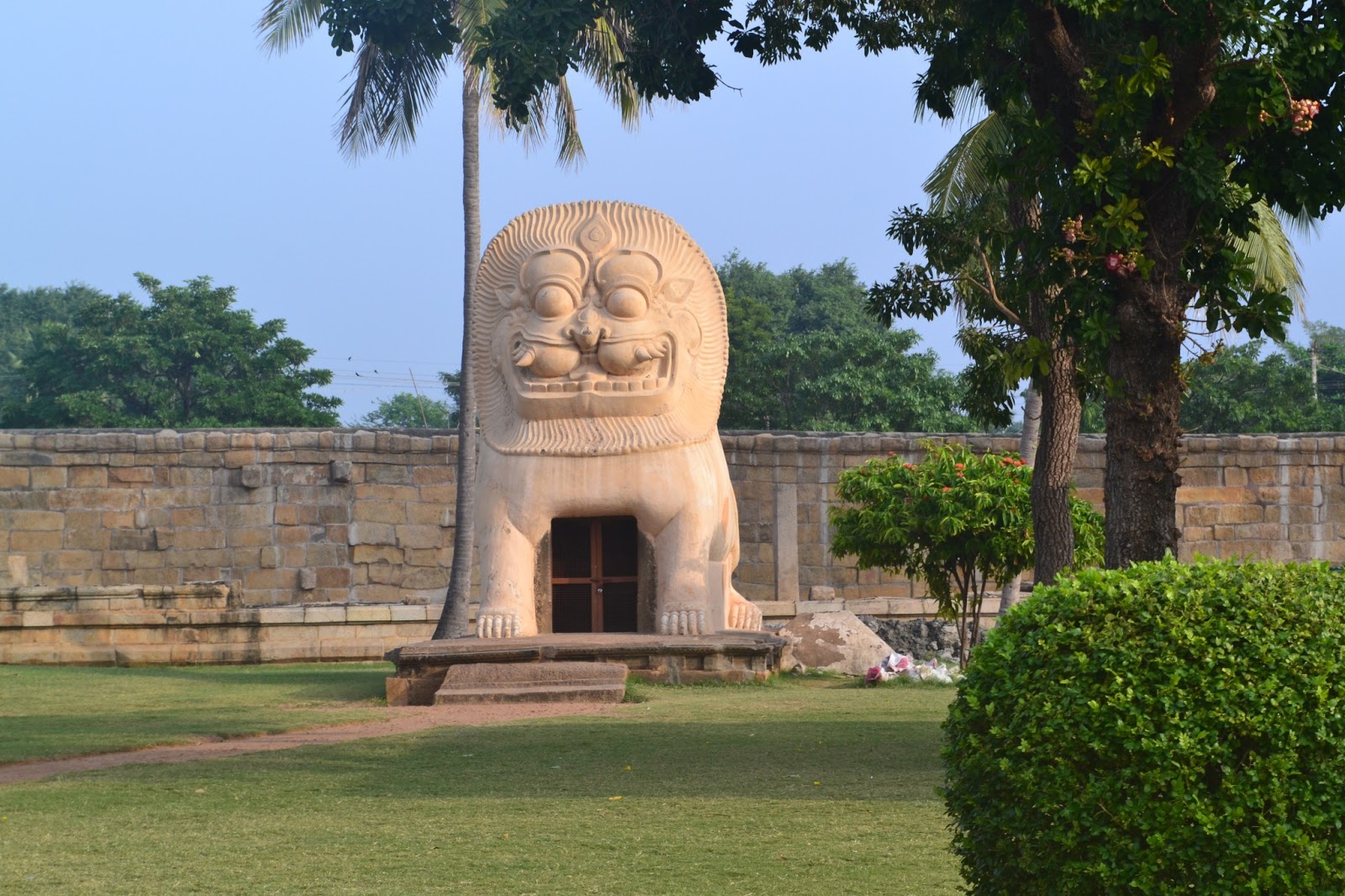
                               This is a well called Simhakeni. Meaning the lion faced well

                                   
                                                One of the side walls of the main tower
One of the entrance leading to the main temple.
One of the small temples within the temple premises . there are 4 such temples on either sides.

                                             
                                                       The lotus and lily laden ponds enroute


Specifications of the bridge-  clicked while we were waiting for the clearance to cross the bridge.


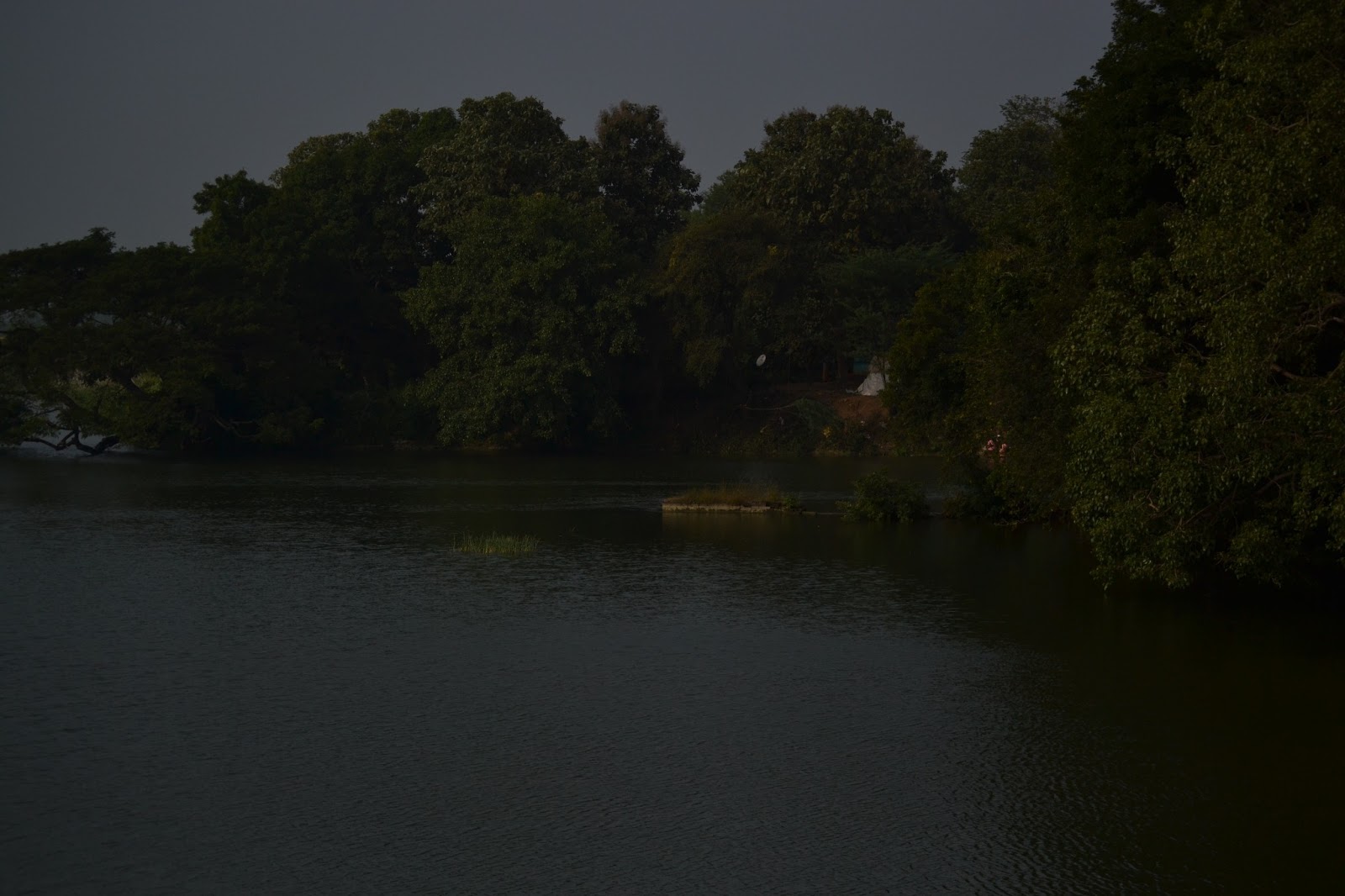
Clicked the Coleroon river from the bridge while whiling our time. the pic from my mobile does not have good lighting but i loved the way the trees bowed towards the river.

P.s: I find some of the general words in my post linked to google sites, i don't know how. Only on publishing it gets linked, it is not there in the draft. Especially in this post, the word "employed' and in the previous post words like "work". I also receive lot of anonymous comments. Can anybody help fix this problem?